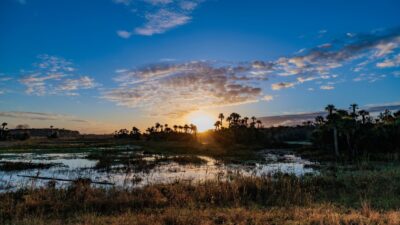
Buying land in Florida? Check whether the lot contains wetlands before you design your dream home. 🏞️ Florida protects these ecosystems, and building on them requires the proper permits. Violating those rules can cost you time, money, and serious headaches.
🔍 Understanding the Basics
Wetlands are areas where the soil stays wet for extended periods, creating a habitat for water-loving plants and animals. 🌧️ These ecosystems manage stormwater, filter runoff, and support biodiversity. Because of their environmental value, they’re closely monitored by the Florida Department of Environmental Protection (FL DEP).
Most wetlands can’t be built on without official approval — and even then, approval isn’t guaranteed.
🌾 Why Many Central Florida Lots Include Wetlands
Across Central Florida, most residential and agricultural lots include at least some wetlands. 🌿 Some parcels are completely wet, making development extremely difficult. That’s why it’s essential to know what you’re buying before you sign anything.
🧭 How to Check a Property for Wetlands in Florida
If you’re considering land, here’s how to check for wetland areas:
- Use county zoning and GIS maps with aerial or vegetation overlays.
- Consult the FL DEP’s tools for a general assessment.
- Hire an environmental consultant for a wetland delineation survey.
🕵️ These tools provide a good start, but don’t rely solely on maps—confirm details with professionals.
🏗️ Can You Build on Wetland Lots?
In some cases, yes—but there are conditions. You’ll likely be required to build only on the dry portion when the land has both uplands and wetlands. 🏡 The state encourages this approach to reduce environmental impact.
Where no uplands exist or impact is unavoidable, you may need a mitigation plan or apply for a limited exemption.
🎥 Watch: How to Minimize Wetland Impacts in Florida
🎥 Watch: Florida DEP Mitigation Guidance
💼 Permit Requirements and Costs
To build on protected land, you’ll need an Environmental Resource Permit. ✍️ As of now, the fees are:
- $420 via mail or email
- $320 if submitted through the FL DEP’s online portal
Additional costs can arise if the state requires mitigation. For example, mitigation credits in the Econ River Basin once reached $120,000 per acre. 💸 On top of that, land prep often includes removing muck and hauling in clean fill.
Helpful resources:
🗂️ County Zoning Resources
Each Florida county handles wetlands and zoning differently. 🗺️ Always double-check with local officials to confirm whether a parcel is buildable and what restrictions apply.
- Seminole County Planning & Department
- Orange County Planning & Development
- Osceola County Zoning and Land Use
📞 Let’s Talk Before You Buy
Thinking about making an offer on land? Call us at 407-564-2758 or fill out the form on our Contact Us page. 🤝 We’ll review the parcel, connect with county officials, and negotiate terms that protect your interests.
You don’t have to figure this out alone—we’re here to guide you every step of the way.